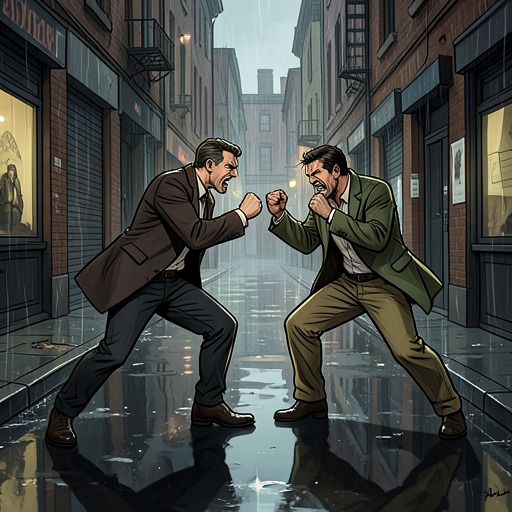
Bernardo's switchblade
West Side StoryBernardo's switchblade is both a concealed weapon and a source of confidence: when Bernardo checks it before meeting the Jets, its quick, locking blade makes him feel able to meet anyone on equal terms—or to overpower them. He does not plan to use it that night, but keeps it ready as insurance against a dishonest encounter, turning the possibility of violence into part of how he enters the negotiation.
Inspection and Readiness
A block from where he had parted from Anita, Bernardo stops in a hallway to test his switchblade. The blade springs out and locks with a hard, immediate click; he puts it away after confirming that it works. The brief inspection gives the object a practical role before the meeting: it is not merely carried, but checked as a weapon on which he may have to rely.
Bernardo then crosses the street and descends a slope carefully, taking care not to twist an ankle. The Sharks are waiting below, wearing their jackets over their T-shirts despite the heat. Bernardo announces himself with a short signal. The knife has been put away, but the scene places its readiness immediately before his entry into the group’s confrontation with the Jets.
Power and Contingency
The switchblade changes how Bernardo imagines his own standing. In his mind, it makes him the equal of anyone and can even put him above them: with the blade, he can bring another person down to his size, or cut that person into pieces. Its power is therefore not limited to a contingency for physical defense. It offers Bernardo a means of imagining control over people who might otherwise challenge or diminish him.
That confidence has a specific limit. Bernardo does not expect to use the knife that evening. He keeps it as a reserve for the possibility that the Jets do not believe he is ready to negotiate, or try to trick him. The blade thus embodies a conditional threat: it remains concealed while the meeting proceeds, but Bernardo imagines a sharp answer if he judges the other side dishonest. Its spring-loaded action makes that threat feel immediate rather than abstract.
Ethnic Hostility and Narrative Role
The weapon’s presence sits beside Bernardo’s anger at being identified as Latino by one of the Jets. He imagines a future moment when he can show what a Latino is capable of, and pictures blood being shed. The text does not say that he uses the switchblade in this encounter; instead, it links the checked weapon with his readiness for a violent response and with the hostility he carries into the meeting.
In that sequence, the switchblade is more than a tool Bernardo happens to possess. Its click, locking mechanism, and imagined capacity to reduce an opponent give physical form to the confidence and intimidation he seeks before facing the Jets. Yet the distinction between readiness and action remains: Bernardo says nothing about planning to use it that night, while the possibility of violence already shapes how he understands the encounter.